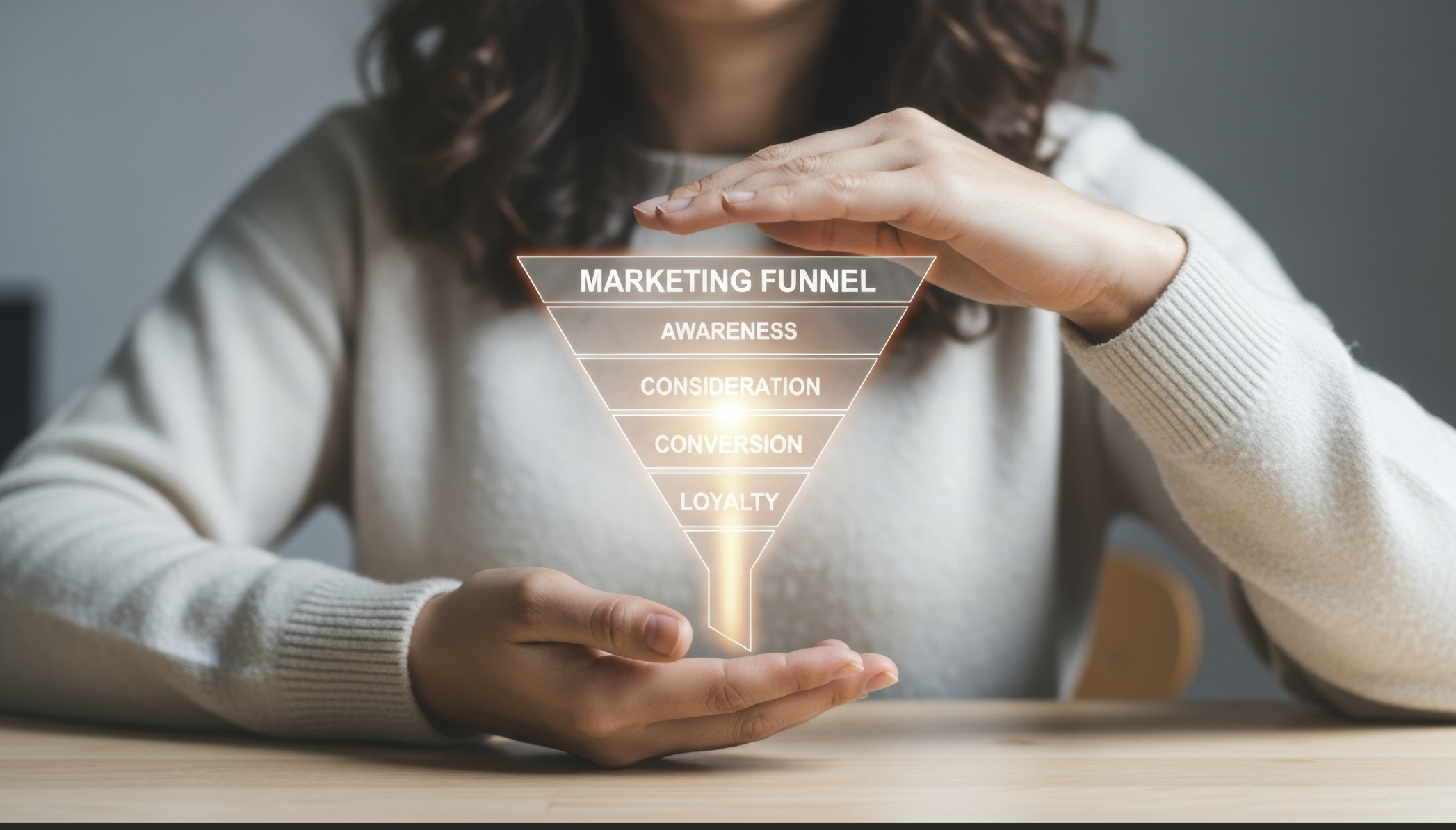


For years, marketing teams built plans around a clean, predictable funnel:
Awareness → Consideration → Purchase.
Simple. Measurable. Comfortable.
And completely disconnected from how people actually buy today.
The funnel didn’t disappear — it just stopped behaving.
Today’s buyer journey looks less like a funnel and more like a pinball machine.
They:
Trying to force that behavior into neat funnel stages is where most marketing strategies break down.
The traditional funnel assumes three things that are no longer true:
In reality, buyers are:
Marketing doesn’t warm them up and pass them along. Marketing stays with them.
Social didn’t kill the funnel. It exposed how fragile it already was.
A single piece of content can now:
That’s not “top of funnel.”
That’s the entire decision process compressed into moments.
This is why brands that still assign rigid funnel roles to channels struggle to explain performance — especially when influencer content, reviews, and community validation drive results that don’t fit legacy attribution models.
Modern marketing works less like a funnel and more like an ecosystem of signals.
Signals that buyers trust:
The job of marketing is no longer to push buyers down a path.
It’s to show up consistently wherever decisions are being made.
Brands that succeed today stop asking:
“Where is the buyer in the funnel?”
And start asking:
“Where does the buyer need reassurance right now?”
That shift changes everything:
The funnel didn’t disappear.
But if you’re still planning like it’s linear, predictable, and controllable — you’re optimizing for a buyer that no longer exists.
Marketing today isn’t about moving people forward.
It’s about meeting them where they already are — again and again — until trust turns into action.
